What is Superior Capsule Reconstruction for Irreparable Rotator Cuff Tears?
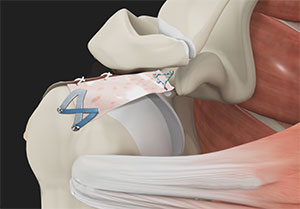
The shoulder joint is stabilized by the joint capsule and rotator cuff. Tears to the rotator cuff can cause severe pain and impairment. When defects in the underlying upper joint capsule add to the instability caused by rotator cuff tears, it cannot be repaired with conventional treatments. Superior capsular reconstruction is a surgical procedure performed to restore shoulder stability in patients with irreparable rotator cuff tears and involves reconstruction of the superior capsule of the shoulder joint using an autograft (tissue obtained from the same patient) or an allograft (tissue obtained from a donor). During the surgery, a graft tissue is attached to the glenoid (shoulder socket) to reconstruct the superior capsule and restore joint function with better glenohumeral stability.
What is Anatomy of the Shoulder?
The shoulder joint, also referred to as the glenohumeral joint, is a ball and socket joint, formed by the bone of the upper arm (humerus), which articulates with the shoulder blade (scapula) in a cavity called the glenoid fossa. The glenoid cavity is surrounded by a raised ridge of cartilage called the labrum that deepens the cavity, and a ligamentous structure called the shoulder capsule that centers the humerus in the cavity. A group of four tendons and muscles called the rotator cuff maintain stability of the shoulder joint, preventing the humerus from sliding out of the socket bone (dislocation). The rotator cuff attaches the humerus to the shoulder blade and helps to lift and rotate your arm.
What are the Indications for Superior Capsule Reconstruction for Irreparable Rotator Cuff Tears?
A fall on an outstretched arm, repetitive stress, abnormal bone growth, or a sudden jerk while lifting a heavy object can cause the rotator cuff to tear. A rotator cuff tear can be treated with non-surgical or surgical repair. However, irreparable rotator cuff tears are massive tears that cannot be easily repaired. They may be asymptomatic or present with severe pain and disability.
Superior capsule reconstruction is indicated for massive rotator cuff tears that cannot be repaired. Such tears are characterized by the size and extent of retraction of the tears. Superior capsule reconstruction is suggested when:
- Initial attempt at repairing the tears by immobilization and soft-tissue release fails
- Arthritis of the glenohumeral joint (chondromalacia)
- Presence of sufficient amount of healthy bone to allow fixation of anchors
- Minimal migration of the humerus
- Intact teres minor and subcapsularis muscles of the rotator cuff
What is the Procedure for Superior Capsule Reconstruction for Irreparable Rotator Cuff Tears?
Superior capsule reconstruction for irreparable rotator cuff tears is usually performed arthroscopically, a minimally invasive technique that uses small incisions, an arthroscope, a tube with a light and camera on the end that projects images onto a monitor for your surgeon to view inside your shoulder joint, and thin surgical instruments to carry out the required repair.
In general, arthroscopic superior capsular reconstruction will involve the following steps:
- The procedure is performed under general and/or regional anesthesia with you lying either in a beach chair or lateral decubitus position.
- Your surgeon makes a few small incisions (arthroscopic portals), about half-inch in length, over your shoulder joint.
- An arthroscope is inserted through one of the incisions into your shoulder joint.
- The arthroscope transmits the image of the inside of your shoulder joint onto a television monitor for your surgeon to evaluate the defects.
- Your surgeon then passes miniature surgical instruments through the other incisions into the shoulder joint.
- Your surgeon carries out partial repair of the rotator cuff.
- The bones of the shoulder joint are then prepared for placement of the graft.
- Suture anchors are placed on the glenoid and rotator cuff.
- The graft tissue is then passed and secured with sutures.
- The suture strands are further secured using lateral anchors (double row technique).
- Your surgeon ascertains that the graft is appropriately secured to the humeral head and superior glenoid.
- A final shoulder assessment is performed to confirm satisfactory repair and graft placement.
- Once the procedure is complete, the instruments are withdrawn, and the skin incisions are closed and bandaged.
What Does Postoperative Care for Superior Capsule Reconstruction for Irreparable Rotator Cuff Tears Involve?
In general, postoperative care and recovery after superior capsule reconstruction will involve the following steps:
- You will be transferred to the recovery area where your nurse will closely observe you for any allergic/anesthetic reactions and monitor your vital signs.
- Following the surgery, your arm will be placed in a shoulder sling for 2 to 4 weeks to rest the shoulder and promote healing.
- You may experience pain, swelling, and discomfort in the shoulder area. Pain and anti-inflammatory medications are provided as needed to address these.
- Antibiotics are also prescribed to address the risk of surgery-related infection.
- You may also apply ice packs on the shoulder area to help reduce swelling and pain.
- You are encouraged to move around in bed and walk as frequently as possible to prevent the risk of blood clots.
- Instructions on incision site care and bathing will be provided to keep the wound clean and dry.
- Refrain from strenuous activities and lifting heavy weights for at least a couple of months. A gradual increase in activities is recommended.
- An individualized physical therapy protocol is designed to help strengthen your shoulder muscles and optimize shoulder function.
- You will be able to resume your normal daily activities in 3 to 4 weeks, but with certain activity restrictions. Return to sports may take 6 months or longer.
- Refrain from driving until you are fully fit and receive your doctor’s consent.
- A periodic follow-up appointment will be scheduled to monitor your progress.
What are the Benefits of Superior capsule reconstruction for Irreparable Rotator Cuff Tears?
Some of the benefits of superior capsular reconstruction include:
- Shoulder stability is restored by structurally replacing the superior capsule of the shoulder
- Improved shoulder flexibility
- Improved muscle strength
- No progression of arthritis
- No tears in graft
- Improvement in night pain
- Minimal complications
What are the Risks and Complications of Superior Capsule Reconstruction for Irreparable Rotator Cuff Tears?
As with any surgery, superior capsule reconstruction is associated with some complications, which may include:
- Infection
- Re-tear
- Severe stiffness
- Severe synovitis
- Bleeding
- Pain
- Allergic/anesthetic reactions